


 ₹ 2,950.00
 ₹ 3,500.00
You will not be allowed to compare more than 4 products at a time
View compareKadhawani Churned — Smart
Kadhawani Churned — Smart
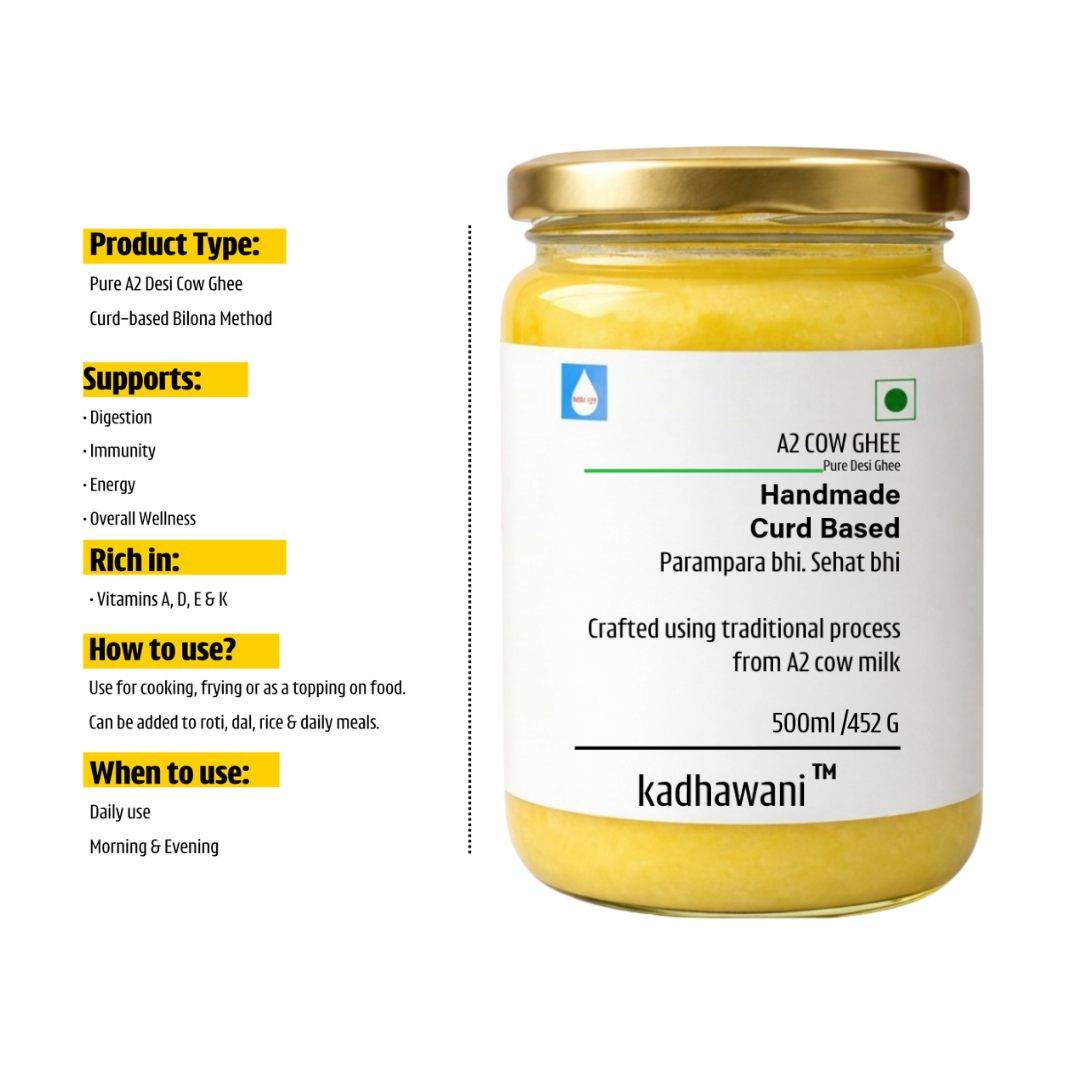
Traditional Bilona Method | Curd based,danedar Ghee | Grass-fed, Pure and Healthy |NABL Lab tested |Cruelty-Free(Glass Jar )
Regular price
₹ 2,500.00
Sale price
₹ 2,500.00
Regular price
Unit price
per
Shipping calculated at checkout.
Sub total : ₹ 2,500.00

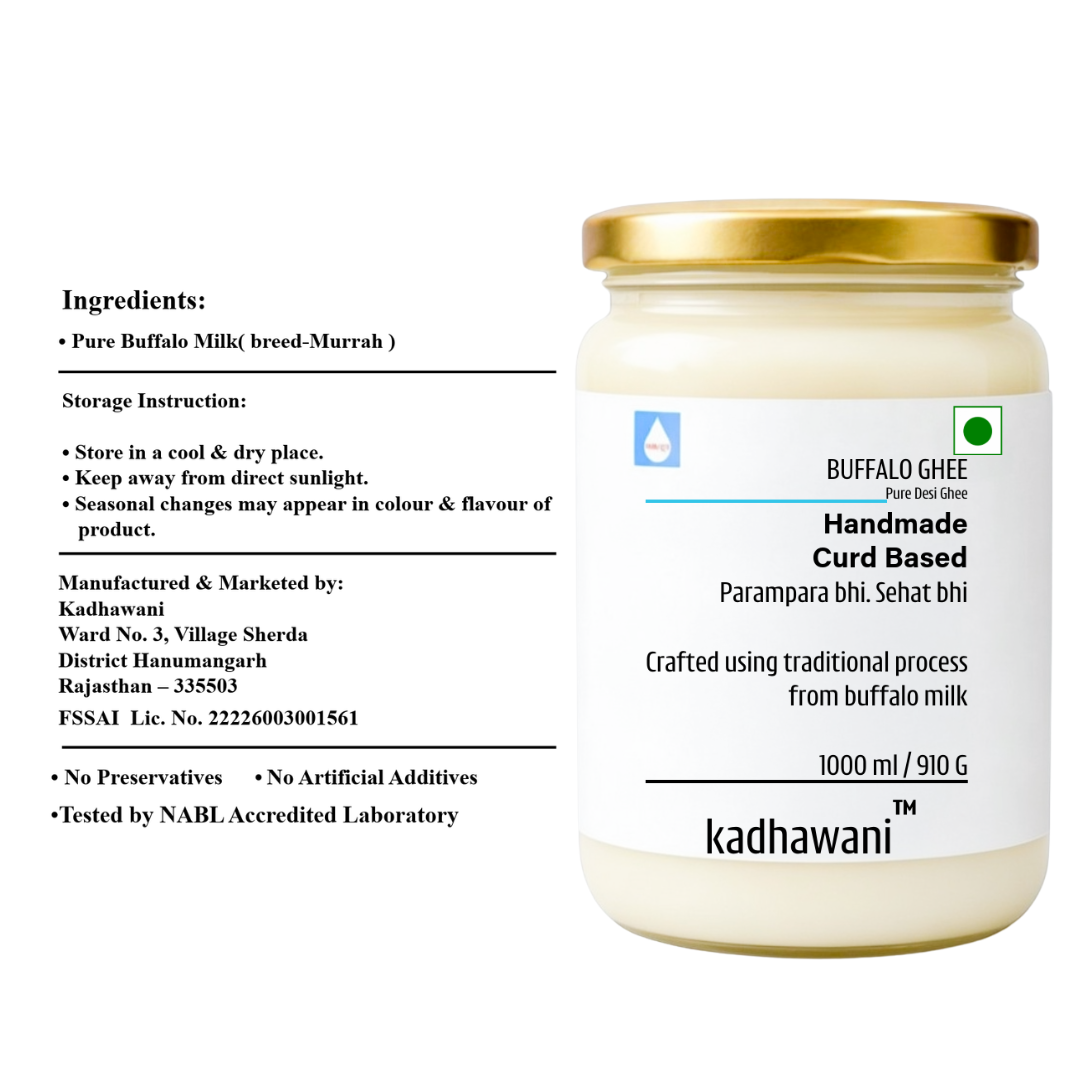
Ingredients
100% pure A2 cow milk fat
Process
From milk to curd, curd to butter, and butter to ghee.
Slow-crafted using the traditional Bilona method.
Shipping
Carefully packed to preserve purity and freshness.
Delivered to your doorstep with fast, safe, and reliable shipping across India.






How To Use

On Roti

In Turmeric Milk

In Dal

In Children’s Meals
A spoon of purity in every plate


Frequently Asked Questions (FAQ)
What makes traditional bilona ghee different from regular ghee?
Traditional bilona ghee is prepared using the curd-churning method instead of directly heating cream. Fresh curd is churned to obtain butter, and the butter is then slowly heated to produce ghee. This time-honored process gives the ghee its distinctive aroma, texture, and depth of flavor.
What is A2 desi cow ghee?
A2 desi cow ghee is made from the milk of indigenous Indian cow breeds that naturally produce A2 beta-casein protein. When prepared using traditional methods, this ghee is valued for its purity, rich taste, and heritage-based preparation.
Why does traditional ghee have a stronger aroma?
The slow heating of cultured butter allows natural milk solids to caramelize gently. This gradual process develops a deeper, nutty fragrance that is often associated with authentic traditionally prepared ghee.
Why does pure ghee become solid in winter?
Pure ghee naturally changes its consistency depending on temperature. In colder weather it becomes semi-solid or solid, while in warmer temperatures it returns to a liquid form. This is a natural characteristic of genuine ghee.
Can ghee be used for everyday cooking?
Yes. Ghee is commonly used in daily cooking for sautéing, roasting, and frying. Its naturally high smoke point makes it suitable for a variety of cooking styles.
How should ghee be stored properly?
Ghee should be stored in an airtight container in a cool, dry place away from moisture. Always use a clean and dry spoon to maintain freshness and quality.
Does ghee need to be refrigerated?
Traditionally prepared ghee can be stored at room temperature. As long as it is kept sealed and protected from moisture and direct sunlight, refrigeration is generally not necessary.